Why this site exists
I got tired of infrastructure tutorials written from documentation instead of experience — posts the author clearly ran once in a throwaway VM, screenshotted, and never touched again. When something in my lab broke at eleven at night, those posts were never the ones that saved me.
So I write the other kind. Every field note here comes from hardware I actually run, or from a throwaway copy of it built to test the steps — including the wrong turns, the gotchas that cost me hours, and the places where I changed my mind. If a guide says a command works, it's because I ran it, broke something with it, and ran it again until I understood why.
Who I am
I'm Josh Hall, in Springdale, Arkansas. The lab's original name — MyOfficeLab — is literal: the lab is my office, and the office is where I think. Four small, secondhand PCs on a shelf run everything my household and my work actually depend on.
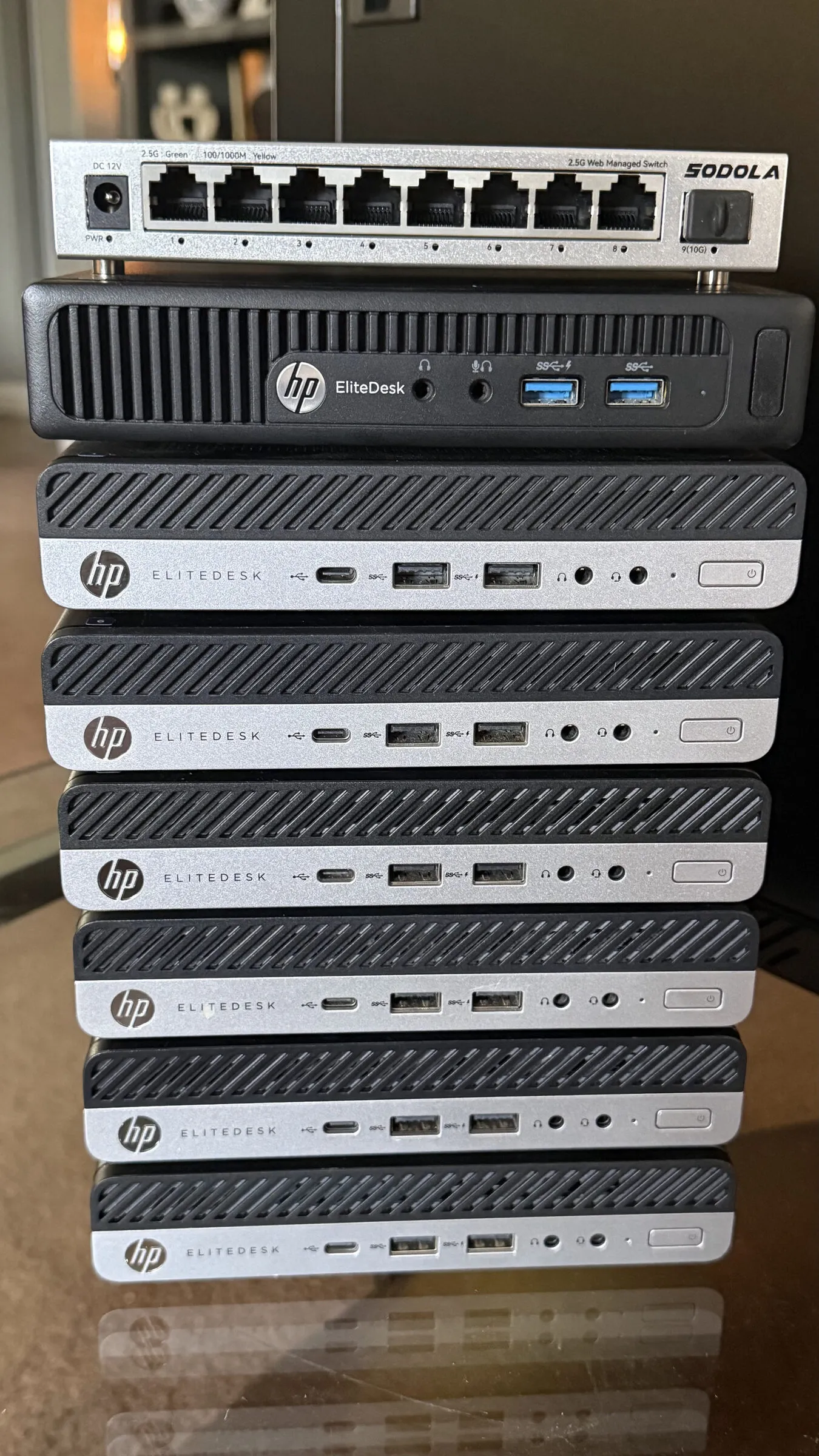
What drives me isn't the hardware, though — it's the discipline around it. The lab keeps a Git-backed knowledge vault that I and the AI agents running inside the cluster all read from, but only a single locked, audited writer can change, under strict rules about what gets remembered, when, and by whom. Nothing important lives only in my head, and nothing gets automated without guardrails and a paper trail. That idea — memory as infrastructure — grew into a thirteen-part series on this site, and it's the closest thing I have to a manifesto.
The name on the door
In the summer of 2026 I put everything I make under one name: Peira Labs (say PAY-rah). It comes from the Greek πεῖρα — "the trial, the attempt" — the same root that gave English the word empirical. Out of a long list of candidates, it stuck because it's the most honest one-word description of how I actually work: I don't trust a setup until I've run it, broken it, and measured what happened. Every verified-date badge on this site is a small act of peira.
The site keeps its working title — Build a Homelab — because that's what these pages teach. Peira Labs is the workshop they come out of: this blog, the lab itself, and the tools I'm building from it all carry the same name now, so the thing you read, the thing I run, and the thing you can download are visibly one practice.
What I believe
- Small hardware can do real work. You don't need a rack or a GPU farm to run a private cloud — you need patience and a used mini PC.
- AI belongs on your own machines. A capable assistant shouldn't require a datacenter or a subscription — mine runs on CPUs I bought secondhand.
- Write down what broke. The failure notes are worth more than the success screenshots. That's why the verified-date badge exists on every guide.
- Automation needs receipts. If an agent changes something in my lab, I can see exactly what, when, and why — and roll it back.
How I check my work
Every command in a guide has to survive being run, and every version, price, and project name has to survive being checked against its source on the day it's written. When something I published turns out wrong or goes stale, I fix it in place and say so: a dated revision note sits at the top of the page, and every correction is listed on theCorrections & Updates page. So far that's 25 of them, and I'd rather show them than hide them.
Playbooks carry a "Tested on real hardware" badge only when the exact script ran end to end;60 of 85 have earned it. The site's build also refuses to ship the mechanical mistakes I've made before, from swallowed backslashes in code blocks to links that bounce through a redirect.
Beyond the shelf
I occasionally consult for small businesses that want the same thing at their scale: self-hosted AI and infrastructure they own, understand, and can afford to run. If that's you, my inbox is open.
Transparency
This site uses Google AdSense and Amazon Associates affiliate links. Posts that contain affiliate links say so on the page. Some linked hardware runs in my lab; some is the alternative I'd recommend for a different budget or need. See the Privacy Policy for details on advertising and data collection.